MuRF1, active
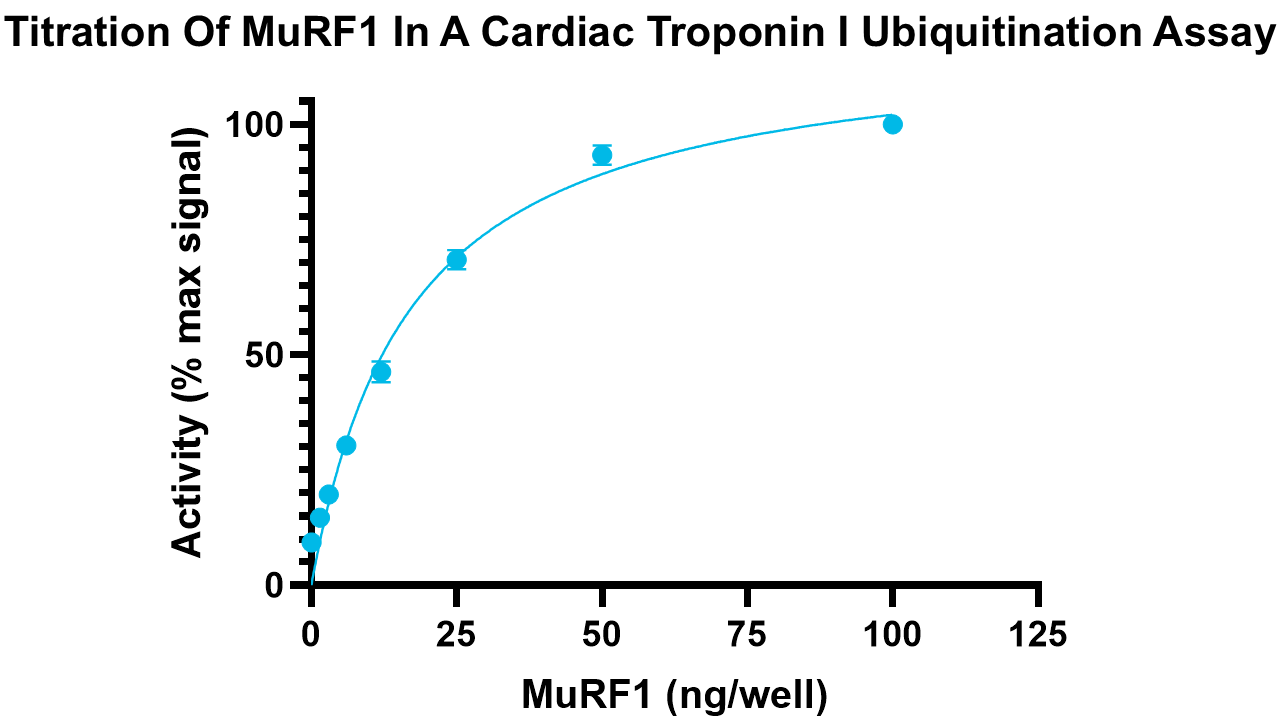
Active MuRF1. N-terminal GST-tagged, recombinant human full-length MuRF1.
Catalog #: 23-054
Size:
10 µg
Unit Price: Contact distributor for pricing
Qty
Specifications
Documentation
Biological Information
Background Information:
MuRF1 is an E3 igase that regulates ubiquitin–proteasome–dependent turnover of muscle proteins during amino acid deprivation, facilitating muscle protein catabolism to supply amino acid demand while concomitantly suppressing de novo skeletal muscle protein synthesis. It promotes proteasomal degradation of myofibrillar proteins, such as myosin heavy chains (MHC), myosin binding protein?C (MyBP?C), myosin light chains 1 (MyLC1), and myosin light chains 2 (MyLC2) leading to skeletal muscle atrophy. The enzyme has emerged as a leading target for pharmacological intervention in muscle wasting disorders, a pathological feature common to numerous diseases - including cancer, sepsis, diabetes, and renal failure - that markedly worsens patient prognosis. This clinical burden has driven significant efforts to identify small-molecule inhibitors of MuRF1 activity. However, investigations into MuRF1 function in the heart have revealed a more complex biology, demonstrating that MuRF1 can exert cardioprotective effects, thereby necessitating careful consideration of tissue-specific consequences when developing MuRF1-targeted therapies.
Target Class:
Ubiquitination-related
Family:
TRIM
Sub Family:
E3 Ligase
Protein Name:
MuRF1
Protein Aliases:
MuRF-1; TRIM63; RNF28
Accession Number:
NM_032588.2
UniProt Number:
Q969Q1
Gene Name:
TRIM63
Gene ID:
84676
Gene Aliases:
IRF; SMRZ; CMH31; MURF1; MURF2; RNF28
Target Species:
Human
Usage
Product Type:
Enzymes
Application:
Drug Discovery & Development
Storage Conditions:
1 year at -70°C
Usage disclaimer:
These products may be covered by issued US and/or foreign patents, patent applications and subject to a Limited Use Label License. Please visit discoverx.com/license for a list of products that are governed by limited use label license terms and relevant patent and trademark information.
Assay Information
Assay Type:
Enzymatic
Assay Measures:
ECL
Bioassay Data
Trademark Statement:
For Research Use Only
Clinical Relevance
Therapeutic Area:
Muscle atrophy